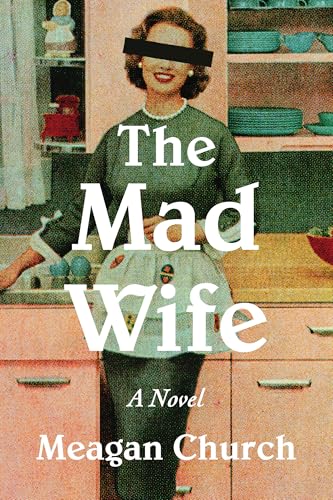
‘The Mad Wife’ is a Chilling Portrait of 1950s Suburbia
Meagan Church’s The Mad Wife opens with a stark, unsettling premise: a young woman in early 20th-century America finds herself trapped in a life shaped more by societal expectations than her own will. Church wastes no time establishing the claustrophobic tension of a world where a woman’s identity can be rewritten—or erased—by the people who claim to protect her. The hook is immediate and effective, drawing the reader into a story that is less about madness and more about the brutal forces that manufacture it.
The pacing moves with a steady, deliberate cadence. Church isn’t chasing shock value; she’s building a slow, escalating dread grounded in realism. The early chapters linger on atmosphere and circumstance, offering a detailed portrait of domestic life that feels deceptively calm. As the narrative progresses, the pressure tightens, and what begins as a quiet character study transitions into something far more suffocating. Some readers may find the midpoint slightly prolonged, but the tension holds because it’s rooted in emotional authenticity rather than plot theatrics
Characterization is unquestionably the book’s strongest asset. The protagonist is layered, vulnerable, and painfully believable—a woman whose internal world becomes the battleground for everything imposed upon her. Church shows restraint in how she reveals her fears and desires, letting them emerge naturally rather than through heavy exposition. The supporting cast, particularly the husband and community figures, serve as chilling reflections of a society more concerned with propriety than humanity. A few background characters fall into predictable archetypes, but they never derail the emotional impact.
Church’s prose is crisp, elegant, and unflinching. She avoids melodrama, instead relying on precise details and sharp emotional insight to create tension. Her style leans literary, but never at the expense of clarity. The one drawback is that her commitment to nuance occasionally slows scenes that would benefit from more direct conflict. Still, the writing carries a quiet power that lingers long after the final chapter.