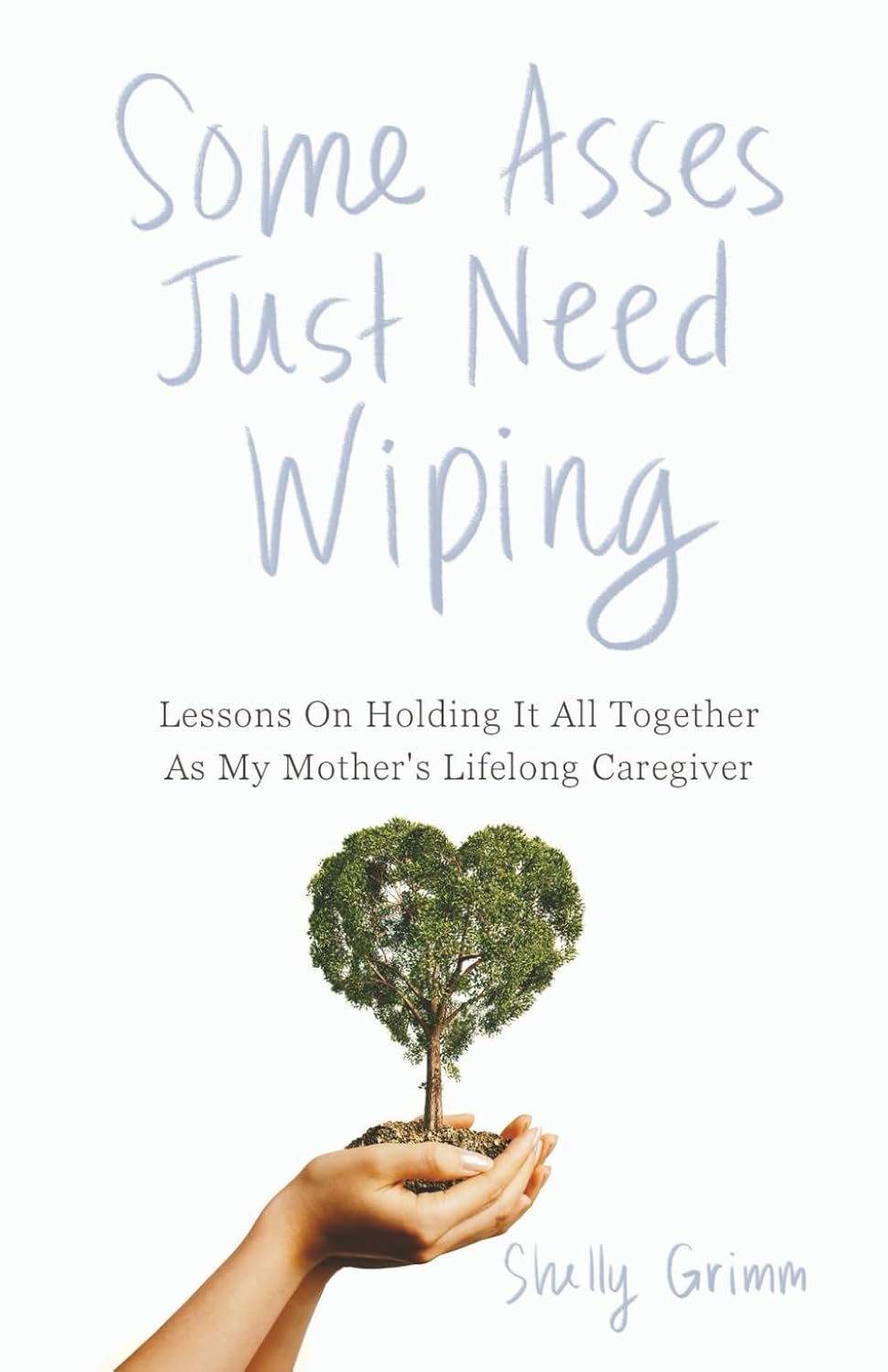
Caregiving Without the Halo: An Editorial Review of Some Asses Just Need Wiping
Some Asses Just Need Wiping: Lessons on Holding It All Together as My Mother’s Lifelong Caregiver by Shelly Grimm is a memoir that refuses sentimentality in favor of unfiltered truth. From its deliberately provocative title onward, the book signals its intent: this is not a softened account of caregiving, but an honest examination of what long-term responsibility does to identity, childhood, and emotional endurance.
Grimm traces a life shaped early by caregiving roles—parenting a chronically ill mother as a child, navigating the emotional instability of a mentally ill partner, and later raising two sons as a single mother, one of whom is neurodivergent. Rather than presenting these experiences as a linear arc of resilience, the narrative acknowledges fragmentation. The book explores how caregiving accumulates quietly, often without recognition, leaving lasting psychological and generational consequences.
Stylistically, the memoir balances stark realism with dark, self-aware humor. The humor is not decorative; it functions as survival language. Scenes involving physical care, medical systems, family dysfunction, and exhaustion are rendered plainly, without the gloss of inspirational framing. This restraint is one of the book’s strengths. Grimm allows resentment, anger, guilt, and tenderness to coexist, resisting the cultural impulse to sanctify either the caregiver or the person being cared for.
What distinguishes this memoir is its attention to unseen labor. Grimm repeatedly returns to the emotional costs borne by children of chronically ill parents and by adults trapped in unchosen caregiving roles. She highlights how systems—medical, familial, and social—often fail to intervene until damage is already entrenched. The result is a narrative that feels less like confession and more like testimony.
The book’s structure mirrors its subject matter: episodic, cumulative, and heavy with repetition. At times, this repetition may test reader patience, but it also reinforces the memoir’s central argument—that caregiving is rarely a single crisis, and more often a slow erosion of self.
Ultimately, Some Asses Just Need Wiping is not a guidebook or manifesto. It is a record of lived experience that validates exhaustion without glorifying sacrifice. Grimm writes with the authority of someone who has endured, reflected, and refused to look away.